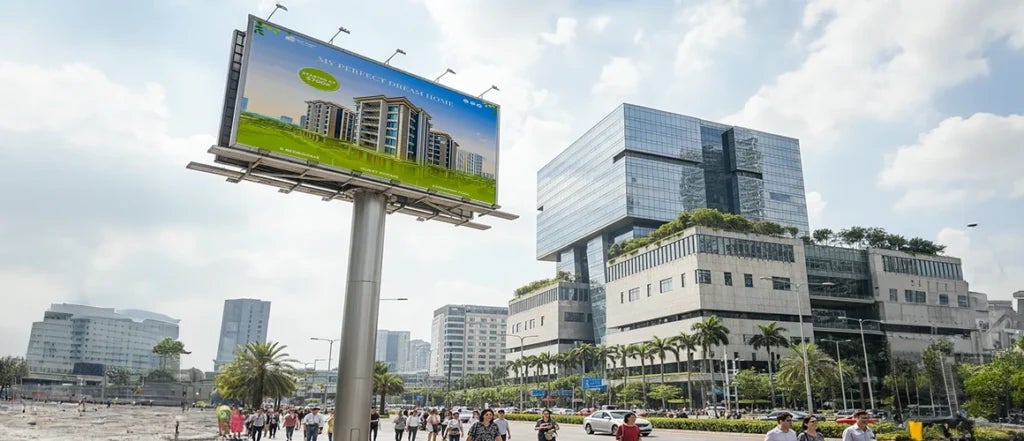
Driving down a busy highway where the traffic slows and your eyes wander, your eyes catch a glimpse of a massive visual that wasn’t really a part of the plan, but you do. The message printed on it is short and crisp, and the image is bold. The brand has three seconds to either make it or break it when juxtaposed with your intellect. That’s how billboards leave an impact.
In this era of endless hours of scrolling screens and ads that disappear, billboards stand tall; quite literally and strategically. They don’t compete in your social media feed; instead, they own their physical space where they reach out to pedestrians, passersby and the entire neighbourhood every single day.
But here is something most businesses don’t realise.
A billboard isn’t just something that’s printed and placed at a certain height to cover a wider audience; there goes a lot of aspects that are taken into consideration prior to that. There’s a whole thought process that follows its placement, design has to be selected mindfully, the most suitable material has to be chosen, and most importantly, the viewing distance has to be evaluated as well in order to bring out the best of it. One small mistake in the form of cluttered text, poor contrast or low-resolution artwork can lead to a missed opportunity that won’t be coming back any time soon.
That’s why it is important to understand the fundamentals.
It doesn’t matter if you’re a growing business that’s exploring the various aspects of market for the first time or an expert that’s planning their next large-scale campaign, this complete guide to billboard advertisement will cover everything for you, starting from coming up with a strategy to designing visuals that naturally command attention. Because,
…when done right, a billboard doesn’t just advertise; it dominates the skyline and your audience’s memory.
Popular Products




Understanding Billboard Advertising
Billboard advertising refers to a large-format printed display that is designed to communicate a brand message to a broader spectrum of audience. One can usually see these billboards in high-traffic areas like: roadways, city centres and a good chunk of commercial hubs. Areas that are dominated by events constantly sport billboards that guide traffic and build anticipation at the same time.
Billboards are effective, since they rely on bold visuals and precise messaging that can be read from a distance. What makes them particularly valuable is their adaptability for time-sensitive promotions and brand reinforcement.
How Does Billboard Advertising Work?
Understanding how billboard advertising works begins with location planning and message clarity. Brands identify high-visibility areas where their target audience is most likely to pass by. Once placement is finalized, the focus shifts to design, printing, and installation.
Billboards are designed to be viewed from a distance, often at speed, which means clarity and contrast play a critical role. For businesses promoting events or storefront launches, billboards act as directional tools that complement on-ground marketing efforts.
Common Types of Billboards Used in Marketing

Billboards come in multiple formats depending on campaign goals and environment. Static billboards are the most traditional option, featuring printed graphics that remain unchanged for a set duration. These are widely used for event promotions and long-term branding.
Mobile billboards are mounted on vehicles and are often used near trade shows or during product launches. Temporary billboards are also common for short-term promotions, offering flexibility for seasonal or event-based campaigns.
The Complete Billboard Advertising and Printing Flow
The billboard advertising and printing process follows a structured workflow that ensures visual consistency and durability. It starts with defining campaign objectives and selecting dimensions based on placement requirements.
Design files are prepared using high-resolution artwork to maintain clarity at large sizes. Once approved, files move into production where materials and printing methods are chosen based on indoor or outdoor usage. Installation completes the process, ensuring the billboard is securely displayed for the campaign duration.
Billboard Designing Tips for Higher Visibility
Effective billboard design focuses on simplicity and readability. Following proven billboard design tips helps businesses maximise impact in high-traffic environments.
Designs should feature minimal text, strong contrast, and a clear focal point. Large fonts improve legibility, while bold imagery supports quick message recall. For event marketing, including directional cues or event dates can improve audience response without overcrowding the layout.
Billboard Printing Methods and Materials Explained
Selecting the right production approach is critical to billboard performance. Billboard printing methods and materials vary based on location, exposure, and campaign length.
Vinyl is the most commonly used material due to its durability and weather resistance. Fabric-based options are sometimes used for indoor or semi-covered environments. Printing methods include digital large-format printing, which ensures consistent color output and sharp detail across oversized surfaces.
Read Also: Custom Billboard Printing: Tailored Solutions for Small Businesses and Local Ads
Billboard Printing for Business Marketing
Billboard printing for business marketing supports brand awareness by maintaining consistent visual identity across campaigns. Businesses often use billboards to reinforce messaging already present in trade show booths, storefront displays, and digital promotions.
By aligning billboard visuals with other marketing assets, brands create a cohesive experience that strengthens recall and trust. This approach is especially effective during large exhibitions or regional events where competition for attention is high.
Billboard Printing and Banner Alternatives
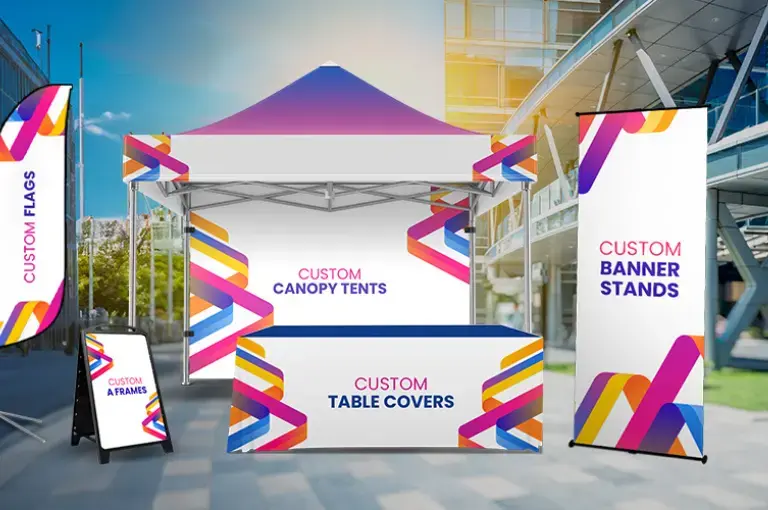
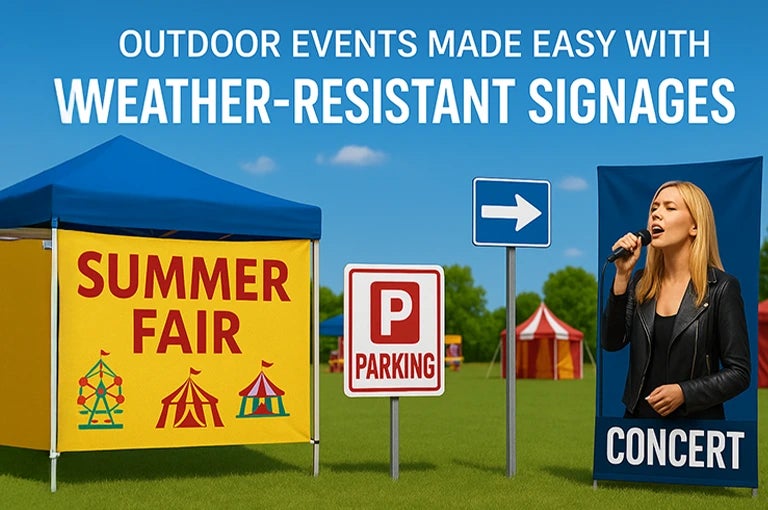
In some marketing scenarios, brands may choose flexible signage formats alongside billboards. Billboard printing is often complemented by on-ground displays such as banners and pop-up signage near event venues.
A custom banner allows businesses to reinforce billboard messaging closer to the point of interaction. A vinyl banner offers portability and ease of installation, making it ideal for temporary promotions, exhibitions, and directional signage during events.
Using Billboards for Trade Shows and Events
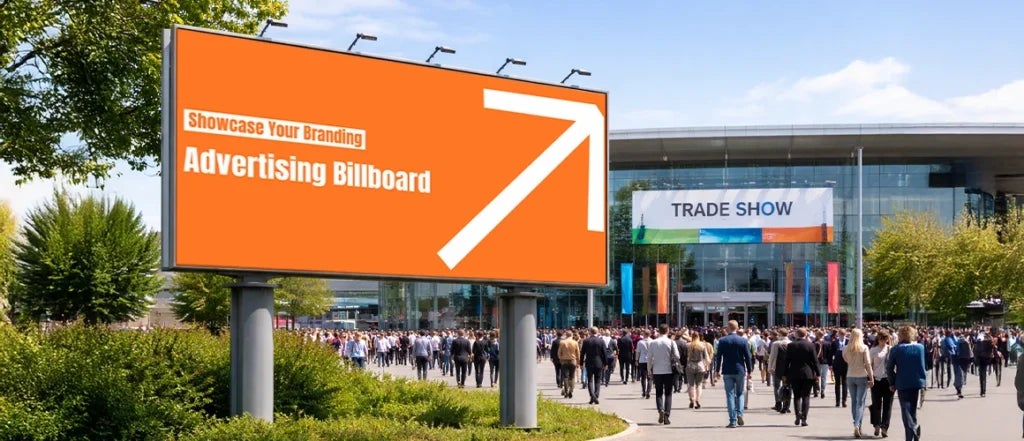
For exhibitors and marketers, billboards serve as pre-event awareness tools that drive attendance. Placing billboards near highways, transit routes, or venue entrances builds anticipation before attendees arrive.
During large trade shows, billboards help brands extend their reach beyond the exhibition floor. This layered approach ensures visibility at multiple touchpoints, increasing the effectiveness of overall event marketing efforts.
Choosing the Right Billboard Strategy
Selecting the right billboard strategy involves evaluating audience movement, budget, and campaign duration. Businesses should consider whether static, mobile, or temporary formats best support their goals. Clear objectives and strong design alignment ensure better results.
Understanding the basics of billboard production helps marketers make decisions that balance visibility, durability, and cost efficiency.
Final Thoughts
Billboard advertising remains a powerful medium for businesses seeking high-impact visibility. From strategic placement to quality printing, every stage plays a role in campaign success. This complete guide to billboard advertising highlights how thoughtful planning and execution can amplify brand presence across events and promotional environments.
For businesses using BannerBuzz solutions, combining billboard displays with complementary signage creates a unified and professional marketing presence that delivers lasting impressions.
 Posted in