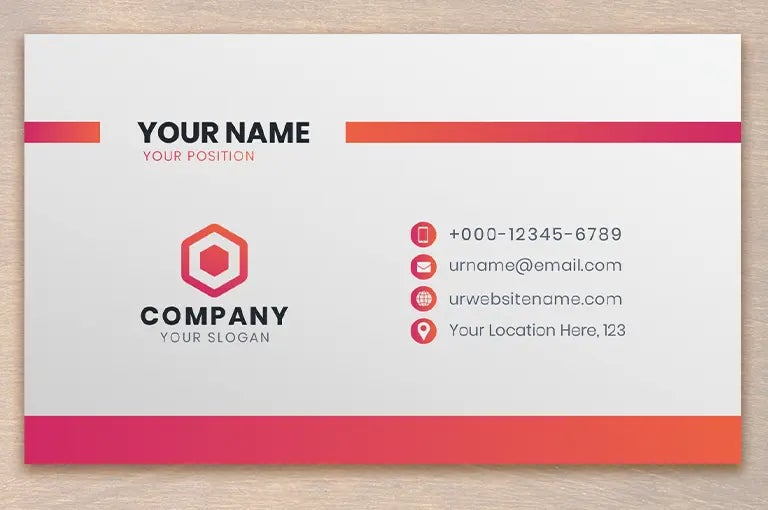




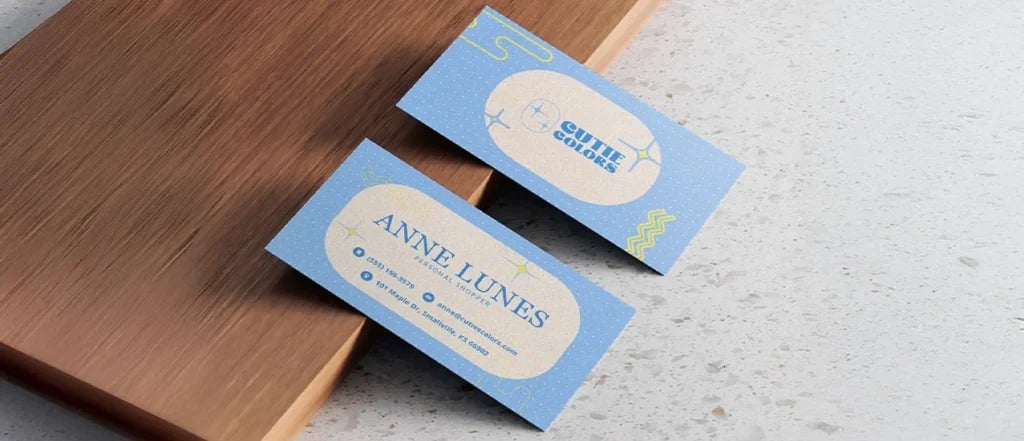
Who said introductions need to be lengthy and forced when you can tell others who you are with just a simple card? Yes! We’re living in a world that’s dominated by digital introductions. Business cards, on the other hand, manage to hold their ground by being a powerful branding tool that often comes in handy. A well-designed business card is great for sharing your contact details, and giving an apt glimpse of who you are and what your business is about. It reflects professionalism and great attention to detail. However, one of the most overlooked aspects of a business card is its size and various dimension.
In this blog, we will be talking about what size should a business card be, and how one can manage to do the job with a simple, well-proportioned design that balances clarity and brand impact together. These are factors that go beyond the aesthetics, as it take other aspects like: readability and brand information into consideration.
Popular Products

Why Business Card Dimensions Matter More Than You Think
When people ask what size should a business card be, they are often focused on convenience or the usual industry norms. However, the right size plays a much deeper role. Cards that align with the right dimensions fit neatly into wallets, cardholders and organizers, increasing the chances of recipients keeping them rather than discard them.
Speaking from a branding perspective, size also impacts visual balance. Text placement, logo visibility and white space all rely heavily on the type of paper you’re working with. A poorly sized card can make even the best design feel cramped or underwhelming. In short, it won’t be interesting enough for people to even pick it up and look at it.
Standard Business Card Sizes Explained
The reason why correct dimensions for business card printing is become important is because it directly affects readability and the overall brand perception. A card that is too heavy or big may not easily fit into a wallet, while one that is too small risks being overlooked or discarded. The reason why standard sizes have become such a vital factor is because it balances portability with enough space to display essential details clearly. Most of the cardholders, scanners and storage solutions are designed with specific dimension in mind.
Printing Considerations You Shouldn’t Ignore
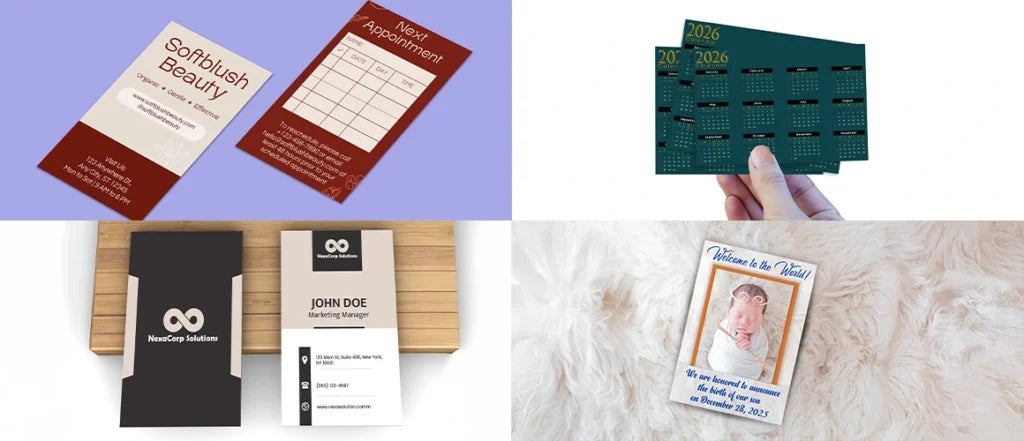
Selecting the right business card size for printing goes beyond choosing the conventional aspects like: width and height. Bleed areas, trim lines and safe zones all play a critical role in how your card is supposed to be printed. Professional printing services account for these technical details, but designers should still plan layouts accordingly. Ignoring these factors can result in badly aligned text or a cropped logo, which diminishes the card’s overall impact; especially when it has to be circulated around business professionals.
Types of Business Cards You Can Choose From
Business cards are more than just contact details on paper; instead, they are a reflection of your brand identity and establish how professionally aligned you are. Choosing the right style can help you stand out as someone who is truly respected. As design trends continue to evolve, understanding the recommended business card dimensions in 2026 also plays a key role. Here are some popular business card styles you can choose from:
1. Die-Cut Business Cards
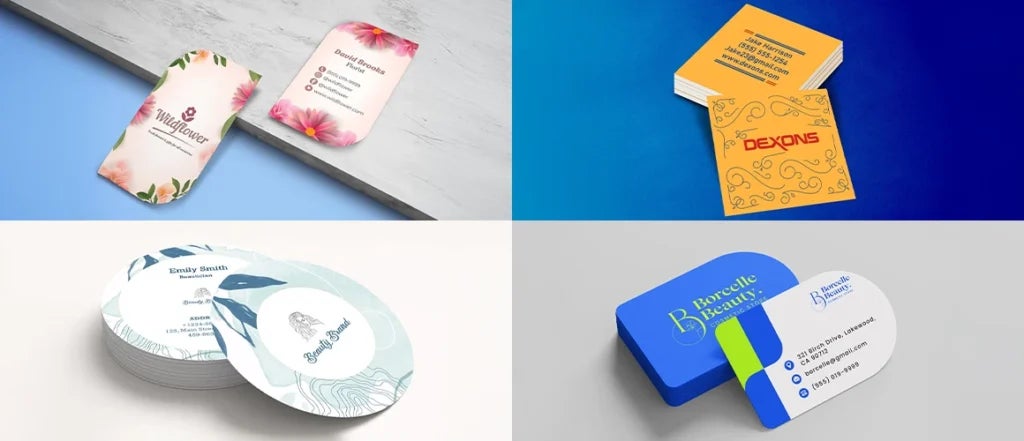
These are unique-shaped cards that go beyond the conventional rectangular shape. They are a great choice for brands that want to appear creative and bold at the same time. And precisely that’s how one stays memorable. Some of the common die-cut business card examples are:
a. Circle Business Cards: Circle business cards are something that instantly draws attention and comes out as a modern and distinctive style. They are usually seen among boutique brands and businesses who always seek originality.
b. Leaf Business Cards: Among a plethora of custom business cards, there is one distinctive style called the leaf business card. They are commonly used among eco-friendly brands, organic businesses, and other services that are inspired by nature.
c. Half Circle Side Business Cards: This card type has a curved edge on one side, and they offer a subtle, yet distinguished twist of style. They are perfect for brands that want to stand out while maintaining a professional appearance.
Read Also: Why High-Quality Business Cards Still Matter for Professionals in the Digital Era
2. Flat Business Cards
Flat business cards are classic, versatile, and widely used across industries. They focus on one simple mantra: clarity.
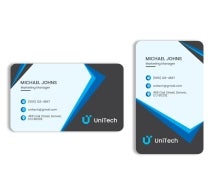
a. Custom Business Cards: Fully customizable in terms of layout, colors, fonts and the finish, these cards allow businesses to align the design closely with their brand identity, making a custom-sized business card for branding that stands out.
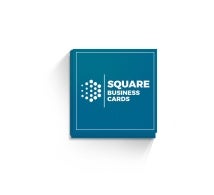
b. Square Business Cards: Square business cards are a great alternative to the standard/conventional card sizes. Their unique proportions make them visually striking and well-suited for creative, fashion and lifestyle brands.
c. Slim Business Cards: Sleek and minimal, sleek business cards are great for professionals looking for a refined and professional look. They fit easily into wallets while still standing out.
3. Folded Business Cards
Folded business cards provide extra space to include information that is a little lengthy. They are ideal for businesses that want to include additional information such as services, hours or even a brief brand message.
Resolution and Design Quality
Even the best-sized card can fail if the design quality isn’t great. Thus, choosing the best resolution for business card design matters that way. With BannerBuzz, one can experience and see great print qualities that stand the test of time. In addition to that, there are multiple paper type options that leave a great impact as well. The different paper types are: 14 pt. cardstock gloss/matte, 16 pt. cardstock gloss/matte and 17 pt. cardstock uncoated. When your designs are printed on great paper qualities, half the job you is already done for you.
Comparing Standard and Custom Options
Understanding standard vs. custom business card dimensions helps businesses make informed decisions. Standard sizes are predictable, cost-effective and widely accepted, making them ideal for most industries. Custom sizes, on the other hand, offer creative freedom and differentiation but may involve higher costs and additional design considerations.
Professional business card printing involves more than transferring ink on paper. Factors like: card thickness, finish and coating, everything influences perceptions; especially when it’s at a table or community of professionals. Matte finishes convey sophistication, while glossy coatings enhance color vibrancy.
Final Thoughts
So far we have understood how choosing the right business card size and dimension is a strategic decision that affects overall branding. From standard formats to custom shapes, every option carries its own advantages and considerations. The key lies in understanding how size, resolution and printing techniques work together to create a card that truly represents your brand. With BannerBuzz offering a wide range of customizable options, businesses can confidently design cards that balance professionalism with creativity. By paying close attention to dimensions and design standards, your business card can become more than just a contact tool; it can be a lasting brand statement.